
 Pay Bill Online
  ORDER CONTACTS
  Request an Appointment
 Myopia Control
At Georgia Center for Sight, we understand how concerning it can be to watch your child’s vision get worse year after year. Myopia, commonly known as nearsightedness, is not just an inconvenience. Without proactive management, it can progress to levels that put your child at serious risk for permanent vision problems later in life.
Our eye doctors offer a comprehensive, personalized approach to myopia management using the most proven, clinically validated treatments available.


What Is Myopia?
Myopia, or nearsightedness, is a refractive condition in which the eye grows too long from front to back, causing light to focus in front of the retina rather than directly on it. This causes objects far away to appear blurry, while close objects remain clear.
Myopia typically begins in childhood and can progress throughout the teenage years as the eye continues to grow. For many children, prescriptions worsen with each annual exam, sometimes dramatically.
What Causes Myopia?
Every year, as children grow, their eyes grow too. In kids with myopia, this growth causes the prescription to keep climbing. For some children, it changes a little each year. For others, it can change a lot.
Two things drive myopia development:
Genetics:
If one or both parents are nearsighted, your child is more likely to be too.
Lifestyle & Environmental Factors:
More time on screens and close-up activities, and less time outdoors, has led to a dramatic increase in myopia among children worldwide. Natural light plays an important role in keeping the eyes developing normally.
Why Myopia Progression Is About More Than Just Glasses
Here’s what surprises many parents: glasses and contacts correct blurry vision, but they don’t stop the eye from continuing to grow. And it’s that ongoing growth, not the blur itself, that’s the bigger concern.
When myopia reaches higher levels, the eye has stretched significantly. That stretching puts stress on the structures inside the eye, and over time, it can lead to serious problems:
Retinal Detachment
The lining at the back of the eye can pull away, which is a medical emergency and can cause permanent vision loss.
Glaucoma
Higher myopia increases the risk of damage to the optic nerve, which can quietly steal vision over time.
Macular Degeneration
The part of the eye responsible for your central, detailed vision can break down, leading to lasting loss of sharp vision.
Early Cataracts
People with high myopia often develop cataracts sooner, requiring surgery earlier in life.
The goal of myopia management is to keep their prescription from climbing so high that these risks become a real concern. Every bit of progression we prevent today protects their eyes decades from now.
Our Myopia Management Treatment Options
Your eye doctor will recommend a plan based on your child’s age, prescription, and how quickly their vision has been changing. We offer three proven treatment options, and in some cases, we may combine more than one for even better results.
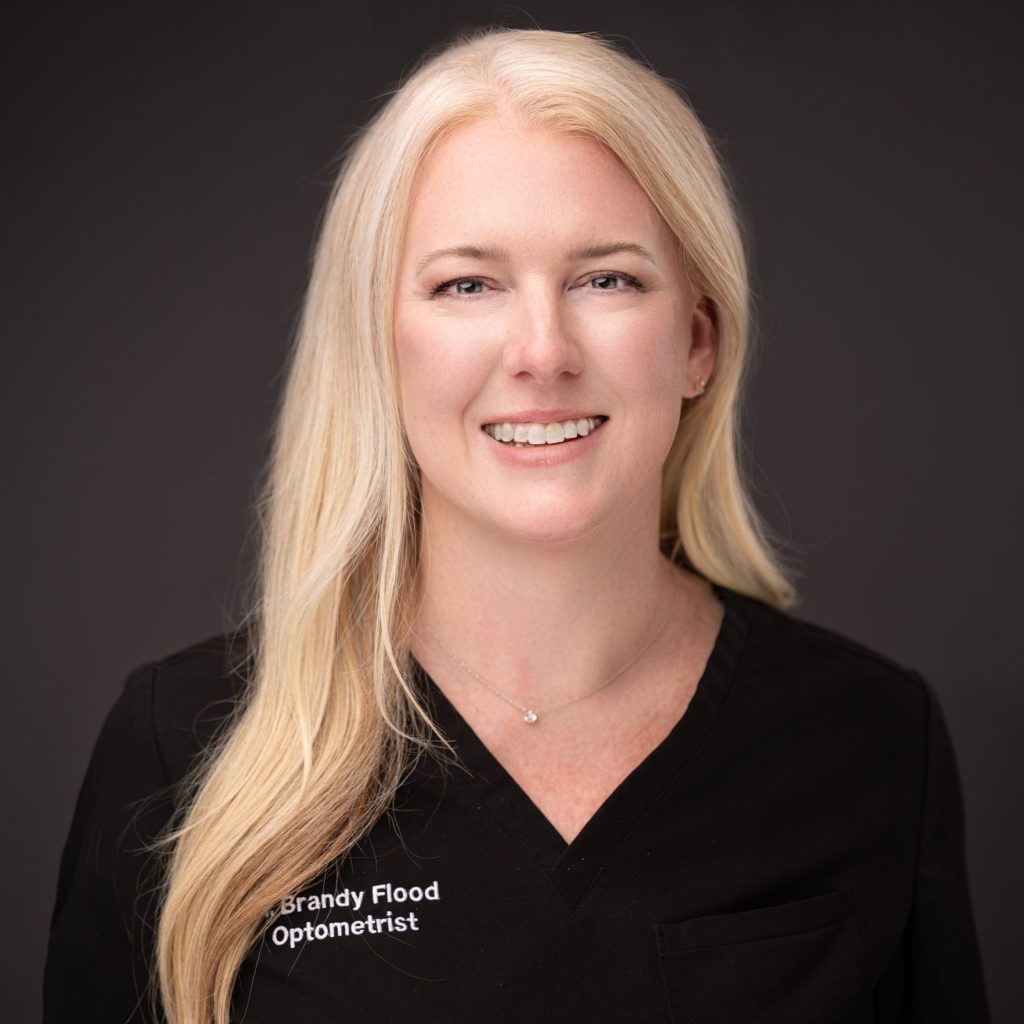
Why Dr. Flood Chose This for Her Own Daughter
As a parent and an eye care specialist, Dr. Flood understands how quickly eyesight can change and the long-term impact that myopia can have on a child’s vision and eye health. When her own daughter began showing signs of nearsightedness, she chose to take action early.
“I’ve seen firsthand how myopia can progress over time and I wanted to be proactive—not reactive—when it comes to my daughter’s vision,”
said Dr. Flood
Dr. Flood chose myopia management to help slow progression early, reduce future risks, and give her daughter the best possible vision for years to come. It’s the same level of care and confidence she offers every family she treats.